Table Of Content
- New Apple ID Password Reset Issue Hitting iPhone iPad And MacBook Users
- Products and services
- Social Media
- Tribeca Festival Reveals TV and Now Lineup Including New Series With Issa Rae, Serena Williams and Jake Gyllenhaal
- The Impact of Radical Design on the Art World
- new documentary traces florence's radical design scene through the legacy of gruppo 9999
- bjarke ingels group takes to university of kansas with mass timber 'makers KUbe'

In the 1960s, reflecting on design’s practices and functions was a major activity stimulated by the political activism and student protests of the period. It was in fact in the universities, particularly those of Florence and Turin, that the foundations of Radical Design were first laid. It was a heterogeneous movement of people who had become disillusioned with the ideals of modernism and wanted to radically reform design, favouring its more critical dimension. Cow Bench by Julia Lohmann, a German designer and researcher who graduated from the RCA, investigates the contradictions in the relationship between humans and animals by exploring “the threshold between animal and material”. The project, defined by the author as a bovine “Memento mori”, consists of a series of upholstered and leather-covered seats, the shape of which represents the very cow that provided the leather, thus conceptually linking the material to the animal that is its origin. Head and legs are not present as they are the first parts of the animal removed at slaughter, while the internal structure recalls the ribs and spine.
New Apple ID Password Reset Issue Hitting iPhone iPad And MacBook Users
Just as Florence gave birth to the Renaissance in the 15th century, so did it provide fertile ground in the 20th century for the radical movement, a ferociously anti-design, anti-dolce vita force that came into being in the halls of the architecture department of the University of Florence. Hungry to critique modernism, radicals provided a stark counterpoint to the “Made in Italy” brand of consumerism of the postwar economic boom of the 1960s. Cactus, by Guido Drocco & Franco MelloGuido Drocco and Franco Mello designed their Cactus with the intention of blurring the lines between the indoor and outdoor. Their “hall-tree”, made from polyurethane foam, is equal parts sculpture and coat-rack.
Free Radical Design reportedly closes its doors - GamesIndustry.biz
Free Radical Design reportedly closes its doors.
Posted: Mon, 11 Dec 2023 08:00:00 GMT [source]
Products and services
Wanting to rise above this standard, young and bold Italian artists and architects created this movement to challenge the so-called beauty. The structure was intended to serve as a refuge for humanity, its volume acting as the optimal living space that would offer a place for every human being, leaving the rest of the earth uninhabited allowing for natural development, free from human intervention. Their vision was of an architecture that could self-organise and operate at any scale. The sheer scale of the vision represented by The Continuous Monument was a commentary on the rise of globalization, a world rendered uniform by technology with local cultures being stripped away. Radical design’s emphasis on sustainability has inspired eco-conscious practices in art-making, encouraging artists to adopt eco-friendly materials and methods.
Social Media
Hence, Poltronova was the company that turned radical talents’ ideas tangible and helped fuel the presence of Radical Design. Lamps like MGM and Paramount distort familiar Hollywood logos to critique the industry. The 1966 Flood of Florence, commemorated in the Tuscan capital just last month, marked another key point in the history of the radical movement. Although the muddy, sewage-filled waters rose up to three meters in part of the historic city center, marring countless artworks and valuable manuscripts, the destruction was seen by some as an opportunity for collaboration and creativity. Two architecture professors at the university, Leonardo Savioli and Leonardo Ricci, responded creatively to student demands, encouraging young architects to incorporate cultural phenomena in their work and seek new ways forward in the field.
Tribeca Festival Reveals TV and Now Lineup Including New Series With Issa Rae, Serena Williams and Jake Gyllenhaal
By embracing unconventional shapes, bold colors, and purpose-driven intent, radical design has challenged traditional norms and reshaped the boundaries of artistic expression. Its integration of sustainability and social consciousness has elevated the role of art as a catalyst for positive change, addressing pressing issues and fostering a more responsible approach to artistic creation. Through the fusion of technology and art, radical design has redefined the art experience, engaging audiences in interactive and immersive ways.
The Impact of Radical Design on the Art World
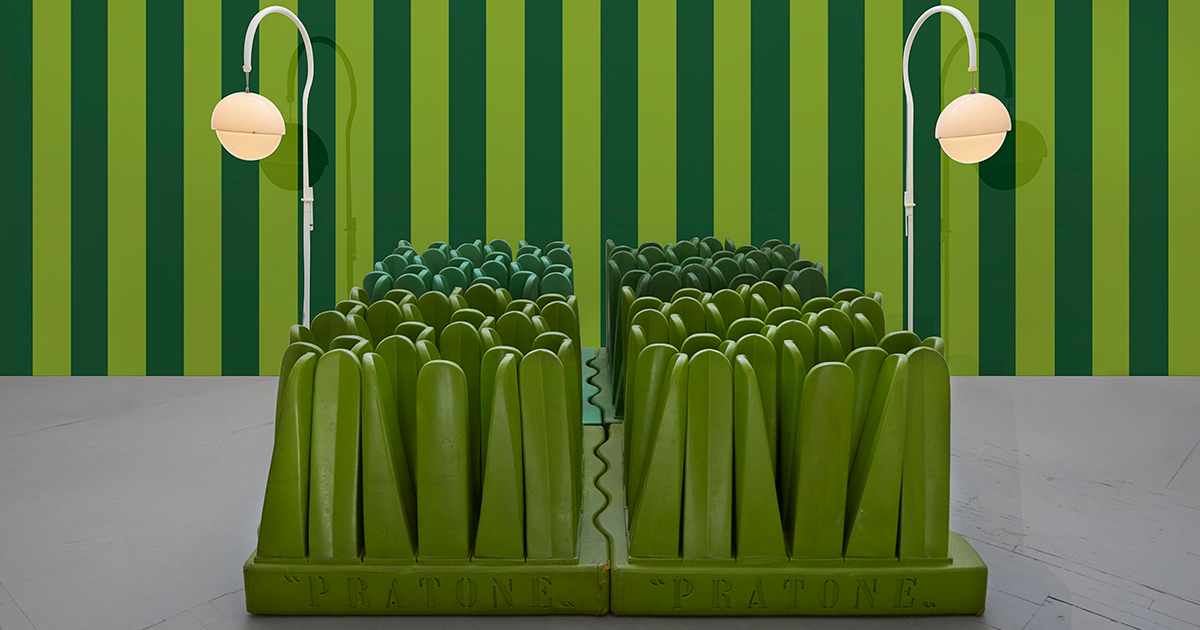
The Joe Sofa, an oversized baseball glove chair designed by Paolo Lomazzi, Jonathan De Pas, and Donato D’Urbino, was an overt critique of the influence of American capitalism. Pratone, a five-foot-square foam seating area of oversized “grass” designed by Gruppo Strum in 1966, was a satirical commentary on the 1960s counterculture’s interest in nature contrasted with the plasticity of industrial production. Towards the end of the 1960s and the beginning of the 1970s, the city of Florence served as the epicenter of Italy’s Radical Design, one of the most important avant-garde movements in the history of architecture and design. The city’s Radical scene consisted of pioneering collectives of young architects, most of whom had trained at the University of Florence. This project was developed by Studio Nucleo, a Turin-based collective directed by Piergiorgio Robino operating in the fields of design, contemporary art and architecture. It aims to highlight how the evolution of production processes generates “alien” products that are less and less comprehensible to the common user.
new documentary traces florence's radical design scene through the legacy of gruppo 9999
Such is the body of work his architecture collective, UFO, created during the brief but explosive radical architecture period in the mid 1960s and early 1970s—a period of creativity that remains surprisingly relevant today. Meanwhile back in London, the authors of that influential magazine Archigram were also creating their own visions of the city of the future. One such vision was the Plug-in City that proposed a linear city housed in a raised grid system that would start near London, grow in one direction towards Liverpool and in the other across the channel, past Paris and on into Europe. The scale of this vision echoed that of The Continuous Monument, while the grid system was similar to the No-stop City.
bjarke ingels group takes to university of kansas with mass timber 'makers KUbe'
The origins of radical design can be traced back to the late 1960s, a period characterized by intense socio-political upheaval and a fervent desire among designers to shape the world according to their vision of societal change. Inspired by the countercultural movements of the time, notably the Hippie and Anti-establishment movements, radical design emerged as a powerful creative force to challenge the prevailing norms. It found fertile ground in design hubs like Italy and the Netherlands, where designers were driven by a profound urge to break away from the shackles of capitalist consumer culture and advocate for sustainability and social equality. In the realm of radical design, the emphasis lies in pushing the boundaries of conventional norms and venturing into uncharted territories of experimental and unconventional shapes.
Museum of the City of New York
The design trends nowadays that are inspired by Radical Design are Critical Design, Social Design, and Participatory Design. “It’s interesting that … the art world has become a place where these things have been reevaluated,” she says. The more than $1.7 million fetched by David Bowie’s personal collection of Ettore Sottsass works at a recent Sotheby’s auction suggests pieces by figures of this period are experiencing an unprecedented level of interest. A red Valentine typewriter designed by Sottsass for Olivetti in the 1960s sold for nearly $60,000, instead of the estimated $350 to $500.
For every success like the new New York Jets logo, there's logo redesign that prompts ire in the stands. The jury's still out, but it seems the new Arsenal logo might fall into that latter category. To predict the stable phase of high entropy alloys (HEAs) with complex compositions, a composition design for HEAs using a calculation phase diagram with a combination of valence electron concentration was proposed. In the present study, Ti1.25ZrHfNbCr2 was designed as a refractory HEA (RHEA) using the proposed method, and the predicted stable phases were in good agreement with those of the alloys fabricated through arc melting.
According to the authors, the best way to understand an object and become intimate with it is to participate in its construction. Consists of the cardboard frame of a seat, which will then be completed by the user by covering it with soil and seeds. When grass grows from the seeds, the structure will in fact become part of the landscape.


No comments:
Post a Comment