Table Of Content
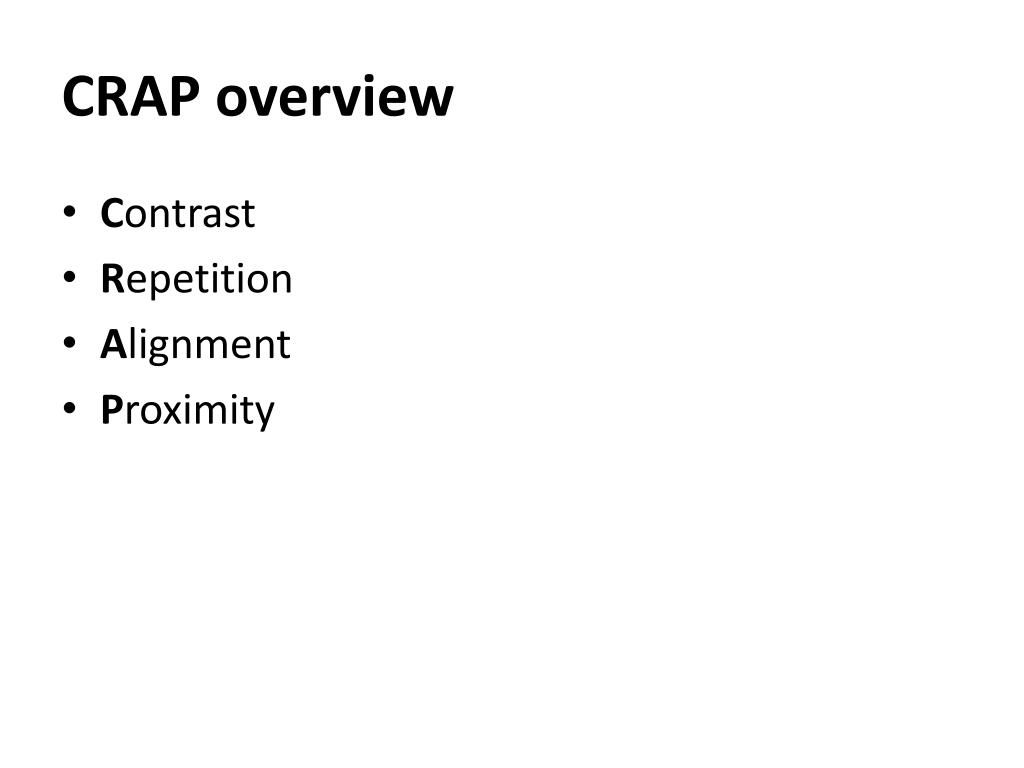
Experiment to discover which one fits your design the most Also, do not forget other CRAP design principles. By paying attention to this principle, you can create designs that are pleasing to the eye and function well on a practical level. You can use it not only in the context of an individual design but also connect all your related designs. It is why of all CRAP design principles, this principle can be used most widely. This principle states that elements on a page should have enough contrast so that they are easily distinguishable from one another.
Wrapping Up All the Principles of CRAP Design
It goes without saying that putting repetition (or consistency) to these website elements will help in improving the user experience. Alignment refers to where text and images are positioned on a page or window. Placing elements next to or near each other or in alignment suggests they are related.
Applying Contrast in UX Design
Contrast is the "one of these is not like the other" design principle. Where emphasis draws the viewer's attention to specific elements in an obvious way, movement is more subtle. Color, value, and texture are just a few ways to achieve this, but also principles such as contrast movement and proportion. These are the principles of design to enhance your creative genius. It provides breathing room between other design elements to highlight spaciousness.
How Can Alignment Create Visual Order and Balance in UX Design?
How to Be a Better Designer - CreativePro Network
How to Be a Better Designer.
Posted: Fri, 17 May 2013 07:00:00 GMT [source]
It also involves alignment between separate objects, text blocks, and all other design elements. When used correctly, repetition can also help to emphasize certain elements and make a design more memorable. For example, some brand attributes in the form of color, shape, logo, or tagline can be repeated over and over again in the designs, even in different mediums. Remember, as long as there is a clear distinction between the various elements and you’re not sacrificing other CRAP design principles, then you are doing it right. Poor contrast can make it difficult for users to read text or click on links, and it can also cause problems for users with vision impairments.
Start by selecting a color palette that has room for both cohesion and contrast. Create rules of repetition to help guide students throughout your course. Then, arrange your page with both alignment and proximity at the top of your mind. If you don’t understand how to create a visually appealing website, then you won’t be able to attract visitors who want to stay on your site for longer periods of time.
Q3: Is it necessary to use all four CRAP principles in every UI design?
Understanding the importance of design principles not only helps me create better user experiences but also allows me to connect with my audience on a deeper level. It enables me to craft designs that resonate with their needs and desires while fostering a sense of belonging and connection. The color of the different text elements, too, is not consistent. The images used are of different styles, ranging from real-life pictures to stock images to a sketch.
Alignment in Action
In the world of design, where aesthetics and functionality come together, certain principles guide us to create visually appealing and effective designs. One such set of principles is CRAP, which stands for Contrast, Repetition, Alignment, and Proximity. These principles serve as a foundation for creating visually balanced and engaging designs. In this blog post, we will delve into each of these CRAP design principles and explore how they can elevate your design game.
Step 3: Alignment
You can notice an example of the correctly applied proximity principle in the following two wireframes (image below). In the image above, on the left, you can see an e-commerce page wireframe with thumbnails, titles, and everything else crammed together with no whitespace in between. It is challenging for the eye to discern which buttons relate to which thumbnail.
CRAP Design: 4 Core Principles to Learn [+Examples]
The principles behind C.R.A.P. design stem from commonly-accepted rules for the use of color, light, line, and layout. Every beautiful painting or photograph includes proper contrasting. Repetition and proximity organize nearly every document in existence. For designers, it's a way of getting audiences to focus on something. Contrast is the difference between elements where their combination makes some elements stand out from others. With the growing use of mobile devices for web browsing, proximity becomes even more critical.

This helps users identify each slide as a part of a bigger whole (or a brand). All together these design principles, commonly referred as CRAP or CARP, make all the great design you see today. Playbills and posters for movies and musicals use these principles. Graphic designers use these to create eye catching websites, logos and more.
These guidelines use elements to tell a story or atmosphere and help blend the elements effectively. This is where certain elements guide the viewer's eye through a planned sequence of elements. Some authoring tools provide ready made ‘themes’ which have already been set up to adhere to the very best elearning and web design practices.
Contrast can be maintained between discrete elements, especially text, using different sizes. This contrast can be established using a combination of colors that lie opposite each other on a color wheel. Each design should have some vertical lines that act as horizontal alignment guides. Your viewers should simply be able to realize the relation of every part of the page to one another.


No comments:
Post a Comment